Periodontics
Gingival hyperplasia: why gums swell
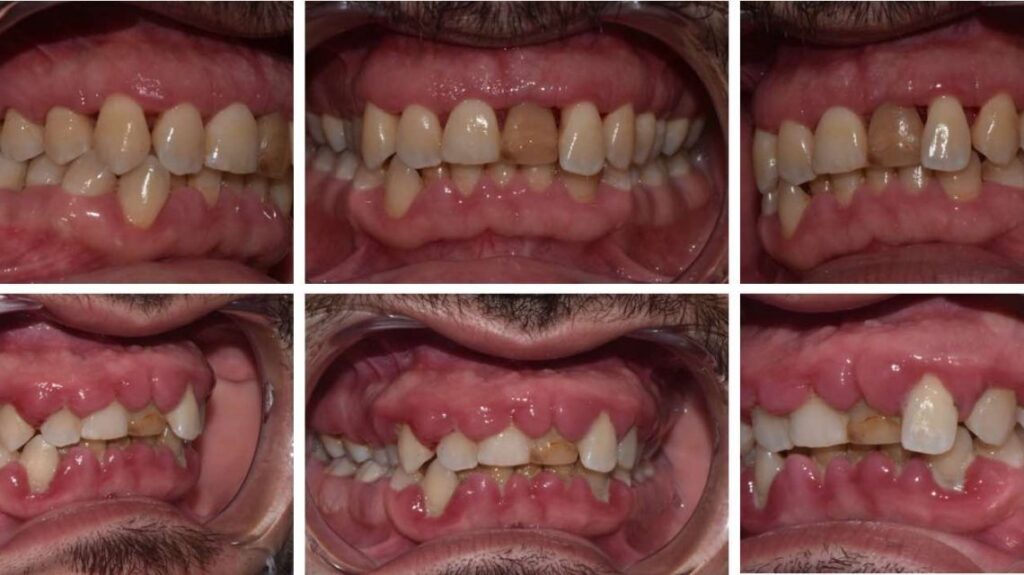
Gingival hyperplasia is characterised by an increase in the volume of the gum. It may be accompanied by bleeding and by a bluish-red gum, different from a healthy one. Its causes may be general or local — and that distinction is essential in deciding how to treat it.
General causes
Some cases of hyperplasia originate outside the mouth altogether:
- taking certain medicines;
- a hormonal problem;
- a vitamin C deficiency;
- a blood disorder, such as leukaemia.
In these cases, treatment begins with addressing the underlying cause, referring the patient to a specialist doctor where necessary.
Local causes
The most common cause remains poor oral hygiene, which leads to a build-up of plaque and tartar and, in turn, to inflammation of the gum.
A gum that swells or bleeds is never trivial: it warrants an examination to identify exactly what is causing it.
What does treatment involve?
Where the cause is local, treatment generally follows several stages:
- bringing day-to-day oral hygiene back up to standard;
- scaling appointments;
- curettage appointments;
- where necessary, gingival reduction surgery.
Regular review then ensures that the inflammation does not return.
Further reading
Please note — This article is provided for information only and is not a substitute for a consultation. Only a clinical examination can establish a diagnosis and determine the appropriate treatment.