Replacing an old bridge with a single-tooth implant rehabilitation
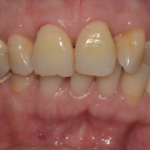
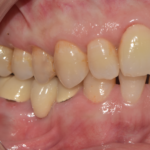
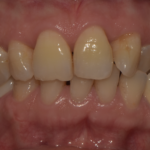
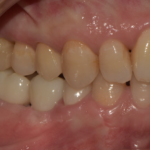
A patient came to Centre Dentaire Marina with functional discomfort caused by an old bridge that had become unsuitable.
After a thorough diagnosis, the bridge was removed and replaced with a single implant-supported restoration. This solution restored optimal passage for dental floss and improved the effectiveness of brushing, while ensuring comfortable chewing and excellent functional comfort.
The advanced resorption of the edentulous ridge was managed with a bone graft, which corrected the unattractive appearance of the elongated tooth and produced a crown with harmonious proportions.
The patient thus regained comfort, stability and complete day-to-day satisfaction.
We now limit the use of bridges to situations where the abutment teeth themselves need a prosthetic restoration. Where the adjacent teeth are healthy, a dental implant is the reference solution — reliable and long-lasting.
For more information, please contact us at CENTRE DENTAIRE MARINA on +212522295282 / +212522481402 / +212661317706 or visit our website: www.drfaisselbennouna.com or our Instagram page: https://instagram.com/centredentairemarina
Orthodontic treatment of dental crowding with a fixed appliance
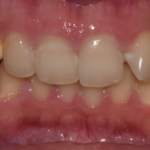
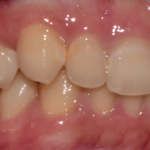
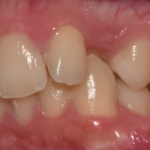
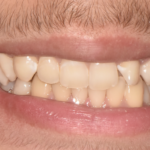
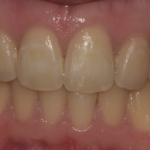
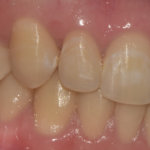
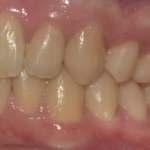
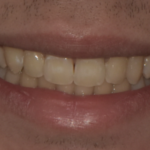
Dental crowding is a lack of space within the arch, causing the teeth to overlap and rotate.
In this case, the patient came to CENTRE DENTAIRE MARINA with irregular alignment of both the front and back teeth.
After a full analysis, orthodontic treatment with metal fixed appliances was undertaken.
The first stages achieved progressive alignment of the teeth and correction of the rotations.
Stiffer archwires were then used in order to harmonise the overbite and improve the balance between the upper and lower arches.
At the end of treatment we achieved a more harmonious smile, well-aligned teeth and a stable bite, ensuring a result that is both attractive and functionally lasting.
For more information, please contact us at CENTRE DENTAIRE MARINA on +212522295282 / +212522481402 / +212661317706 or visit our website: www.drfaisselbennouna.com or our Instagram page: https://instagram.com/centredentairemarina
Full cosmetic rehabilitation: bridge, composites and whitening
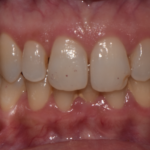
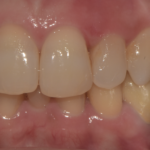
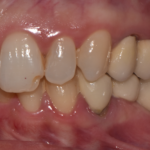
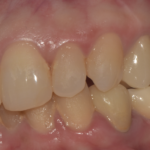
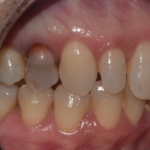
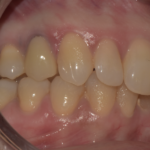
A patient came to Centre Dentaire Marina with damaged front teeth, wanting to improve her smile.
After a full diagnosis and the drawing up of a personalised treatment plan, comprehensive care was carried out.
It began with a periodontal debridement phase, including scaling and root planing, to ensure a healthy environment before starting treatment.
At the back of the mouth, an old, poorly fitting bridge was replaced with a zirconia bridge, offering strength, biocompatibility and a natural appearance.
A crown was also made to restore a weakened tooth for the long term.
Cosmetically, the front teeth were restored using layered composites, correcting their shape, improving alignment and bringing harmony back to the smile while remaining conservative.
Tooth whitening completed the treatment, lightening the shade and enhancing the final result.
Thanks to this comprehensive approach, combining periodontal, prosthetic and cosmetic care, the patient was able to regain a natural, balanced and functional smile that fully met her expectations.
You too can consider comprehensive care to improve your smile, restore your chewing function and protect your oral health.
For more information, please contact us at CENTRE DENTAIRE MARINA on +212522295282 / +212522481402 / +212661317706 or visit our website: www.drfaisselbennouna.com
Correcting an anterior crossbite and a midline deviation
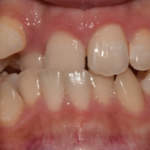
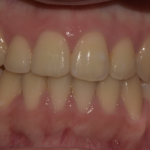
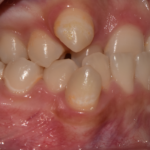
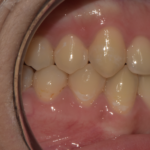
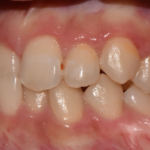
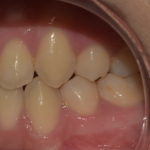
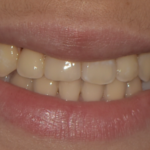
This is the case of a young patient who presented with dental crowding and misaligned teeth in both arches, together with an anterior crossbite and a deviation of the midline.
Orthodontic treatment began with the fitting of a palatal expander, in order to achieve maxillary expansion and create the space needed to align the teeth and correct the midline.
Treatment then continued with a fixed appliance (bands and brackets), making it possible to align the teeth, close the spaces and achieve a functional, stable and harmonious bite.
This type of treatment requires regular follow-up as well as good cooperation from the patient, in order to ensure an optimal result both aesthetically and functionally.
We recommend a check-up with the dentist before the permanent teeth come through.
For more information, please contact us at CENTRE DENTAIRE MARINA on +212522295282 / +212522481402 / +212661317706 or visit our website: www.drfaisselbennouna.com
Orthodontic traction of impacted canines in an adolescent
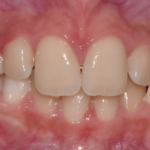
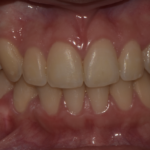
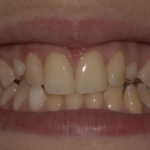
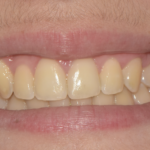
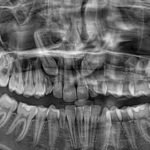
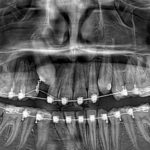
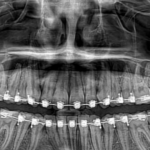
A 13-year-old patient came to Centre Dentaire Marina with her parents for orthodontic treatment to align her teeth and correct the way they met.
Clinical and X-ray examination revealed impacted canines, together with narrow dental arches, which explained the impactions.
The treatment plan consisted of expanding the upper and lower arches in order to create the space needed to align the teeth and to bring the impacted canines into position.
Orthodontic traction of the impacted upper canines was then carried out to guide them gradually into the arch.
Treatment continued with a fixed appliance (bands and brackets), making it possible to align the teeth, coordinate the arches and achieve a harmonious result both aesthetically and functionally.
This is why an orthodontic consultation at an early age is so valuable: in some cases it can prevent complications of this kind, through interceptive orthopaedic appliances that encourage the arches to develop harmoniously and reduce the risk of impacted teeth.
For more information, please contact us at CENTRE DENTAIRE MARINA on +212522295282 / +212522481402 / +212661317706 or visit our website: www.drfaisselbennouna.com
Implant rehabilitation after mandibular tooth breakdown
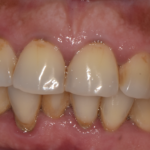
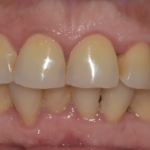
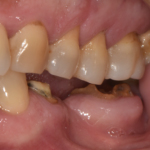
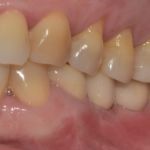
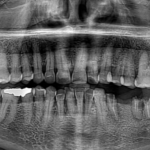
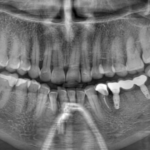
This patient came to Centre Dentaire Marina with significant breakdown of the teeth on the left side of the mandible. Clinical examination revealed two retained roots that could not be saved, together with a missing tooth in the same area.
Before undertaking the implant rehabilitation, a preparatory phase was carried out to make the whole mouth healthy: full scaling, treatment of the cavities present on the other teeth, and restoration of the oral environment.
Once the unrestorable roots had been extracted, dental implants and a bone graft were placed in order to replace the lost teeth and restore chewing function for the long term.
✅ The final result allowed the patient to regain comfortable chewing, a stable bite and a harmonious, attractive smile, while protecting her oral health for the long term.
Because a successful implant rehabilitation always begins with a healthy mouth.
For more information, please contact us at CENTRE DENTAIRE MARINA on +212522295282 / +212522481402 / +212661317706 or visit our website: www.drfaisselbennouna.com
Gingival hyperplasia: why gums swell
Gingival hyperplasia is characterised by an increase in the volume of the gum. It may be accompanied by bleeding and by a bluish-red gum, different from a healthy one. Its causes may be general or local — and that distinction is essential in deciding how to treat it.
General causes
Some cases of hyperplasia originate outside the mouth altogether:
- taking certain medicines;
- a hormonal problem;
- a vitamin C deficiency;
- a blood disorder, such as leukaemia.
In these cases, treatment begins with addressing the underlying cause, referring the patient to a specialist doctor where necessary.
Local causes
The most common cause remains poor oral hygiene, which leads to a build-up of plaque and tartar and, in turn, to inflammation of the gum.
A gum that swells or bleeds is never trivial: it warrants an examination to identify exactly what is causing it.
What does treatment involve?
Where the cause is local, treatment generally follows several stages:
- bringing day-to-day oral hygiene back up to standard;
- scaling appointments;
- curettage appointments;
- where necessary, gingival reduction surgery.
Regular review then ensures that the inflammation does not return.
Impacted teeth: when a tooth stays trapped in the bone
An impacted tooth is a tooth that remains held inside the jaw, never coming through into the mouth. It has therefore failed to erupt normally into the dental arch, because neither the space nor the path of eruption were favourable.
How is the diagnosis made?
The dental surgeon confirms the diagnosis by clinical examination, always supported by X-ray imaging. It is that imaging which makes it possible to locate the tooth precisely, to assess its angle and how close it lies to the surrounding structures (the roots of neighbouring teeth, the nerve, the sinus) before any treatment decision is taken.
What treatment is needed?
What to do depends above all on which tooth is involved.
Where it is a wisdom tooth, the most common course of action remains extraction, particularly when there is not enough space available in the arch.
For other teeth, however, the clinician takes a more conservative approach, aiming to preserve the tooth and to restore both appearance and function:
- Surgical exposure, to uncover the impacted tooth;
- Traction, to bring it gradually into its place in the arch;
- Orthodontic treatment, to complete its alignment.
Every impacted tooth is different: only a reading of the X-rays can determine the most appropriate strategy.
Why seek advice early?
An impacted tooth detected early, particularly in a child or adolescent already undergoing orthodontic treatment, leaves more conservative options open. Regular X-ray checks make it possible to anticipate an impaction before it complicates the rest of the treatment.
Bleeding gums: understanding periodontics
Gums that bleed when you brush are never “normal”. It is the first sign of periodontal disease — and, caught in time, it is reversible.
1. Healthy gums
Healthy gums are pink in colour with a lightly stippled, orange-peel texture. They are naturally able to defend themselves against bacteria and viruses.
2. Gingivitis
Gingivitis is the term used when bleeding, pain or swelling appear. Detected and treated in time, it is reversible.
3. Periodontitis
Untreated gingivitis progresses to periodontitis. The bacteria advance and, once past the barrier of the gum, attack the bone that supports the teeth.
That bone is destroyed little by little: after a certain time the teeth become loose and painful, they recede and eventually fall out.
Bone destruction is irreversible. That is why early detection changes everything about the prognosis.
Treatment, step by step
- Learning a proper brushing technique — the foundation of the whole treatment, without which nothing holds in the long term.
- Initial treatment: eliminating the direct causes (tartar, plaque) through scaling and subgingival curettage with root planing; then the indirect causes (defective fillings and crowns, overlapping teeth) to make the ground healthy again.
- Application of the dental laser, which achieves deep decontamination of the tissues.
- Periodic review — maintenance: periodontal disease can start progressing again if cleaning standards are no longer kept up.
What to remember
Periodontics is as much about follow-up as it is about treatment. A patient who is treated and then reviewed regularly keeps their teeth; a patient who is treated but then lost to follow-up often sees the disease return.
Orthodontics, for children and adults
Orthodontics is not just for children. It corrects misalignment of the teeth and the dental arches, with benefits that go well beyond appearance: chewing, hygiene, and the balance of the jaw joint.
The first appointment
The initial consultation, for your child or for yourself, is the opportunity for a first examination to determine whether treatment is indicated or not.
Where it is, further investigations are carried out at a later visit: X-rays, impressions of the dental arches, photographs, and a thorough examination of the teeth and face.
Before any treatment begins, the patient and parents are told what type of appliance is needed and how long it is likely to take. A detailed quotation is provided, covering the fees and the payment arrangements chosen.
Where does misalignment come from?
The most common problems are caused by:
- deformation of the dental arches caused by thumb or finger sucking;
- the tongue pushing forward during swallowing;
- mouth breathing, which alters the resting posture of the tongue;
- teeth that are too large for the size of the mouth, or the reverse;
- a growth discrepancy between the two jaws;
- one or more missing teeth (agenesis);
- teeth impacted or retained within the jaw.
Caught early, several of these causes can be corrected by simple measures, before an appliance is even considered.
How treatment works
Orthodontics, a branch of dentofacial orthopaedics, deals specifically with misalignment of the arches and the teeth. By preventing imbalances from appearing or getting worse, it restores correct chewing function and an alignment that stays stable over time.
Today’s options, such as discreet fixed appliances and clear aligners (Invisalign), make it possible to treat children and adults alike, with limited impact on daily life.